Your law degree didn’t prepare you for this: sitting in your office at 8 PM, scrolling through competitor websites that somehow rank higher than yours on Google, wondering why your phone isn’t ringing despite twenty years of legal expertise. Meanwhile, newer firms with flashier websites are booking the cases you should be handling.
You’re not alone. An overwhelming majority of legal consumers now use online search to find or research attorneys, yet many experienced lawyers still rely primarily on traditional referral methods. The harsh reality? With over 1.3 million lawyers competing for visibility in the United States, exceptional legal skills no longer guarantee a thriving practice. Your potential clients are online right now, researching attorneys, reading reviews, and making hiring decisions—often without ever knowing you exist. Law firms must leverage digital strategies to attract clients who are actively searching for legal services online.
This guide reveals the exact digital marketing strategy for law firms that attract high-quality clients online, generate measurable returns on their marketing investment, and position themselves as the go-to resource in their practice areas. This guide focuses on digital marketing for lawyers, providing actionable steps tailored to the legal industry. You’ll discover the step-by-step process to transform your law firm’s online presence from invisible to irresistible.
What is Digital Marketing Strategy for Law Firms?
Digital marketing for law firms encompasses a range of online strategies, including SEO, content marketing, PPC advertising, online marketing, and social media, to attract potential clients. It involves building your law firm’s online presence across search engines, legal directories, and social platforms where clients are actively searching for legal help.
Unlike traditional marketing methods that relied heavily on referrals and Yellow Pages advertisements, a comprehensive client acquisition system combines multiple channels to establish expertise, authority, and trustworthiness (E-A-T) for your law firm. This approach acknowledges that most clients now initiate their attorney search online, thoroughly researching options before making contact.
Here’s the uncomfortable truth most legal marketing experts won’t tell you: modern legal clients require 7 hours of content across 11 touchpoints in 4 locations before converting. This is the 7-11-4 Rule—and it’s why DIY marketing efforts, single-channel approaches, and traditional referral strategies consistently fail to deliver results. Your potential clients aren’t making snap decisions anymore; they’re conducting exhaustive research before ever picking up the phone.
Modern client acquisition goes beyond traditional referrals to create a comprehensive digital ecosystem that positions your firm as the go-to resource. This ecosystem comprises your law firm’s website as the central hub, supported by law firm SEO to enhance visibility, content marketing to showcase expertise, social media marketing to foster relationships, and paid advertising to capture high-intent searches. Building a strong law firm’s brand through digital marketing is crucial for differentiating oneself in a competitive market and connecting with potential clients.
The shift from traditional to digital marketing reflects a change in consumer behavior. While personal referrals still account for a significant portion of business, a growing majority also thoroughly researches lawyers online. Your online presence is often the first—and sometimes only—impression potential clients will have of your firm. A systematic client acquisition system is now a critical driver for growing your law firm’s business and expanding your practice.
Benefits of Digital Marketing for Law Firms
Digital marketing enables law firms to enhance their online visibility and connect with a broader audience of potential clients than ever before. By implementing digital marketing strategies such as search engine optimization (SEO), content marketing, and social media marketing, law firms can ensure their services appear prominently when clients search for legal help online. This enhanced visibility not only drives more traffic to your law firm’s website but also improves brand recognition, positioning your firm as a credible authority in your practice areas.
A well-crafted digital client acquisition system enables law firms to effectively showcase their expertise through The Legal Epiphany Engine—strategic content that makes prospects aware of legal issues they didn’t know they had, creating organic demand for your services rather than competing for existing demand. This, in addition to engaging social media content and targeted marketing efforts that directly address the needs of their target audience. By consistently sharing valuable insights and legal tips, your firm can establish trust with prospective clients and differentiate itself from competitors in a crowded marketplace.
Another significant benefit of digital marketing is its measurability. Unlike traditional marketing, digital marketing strategies provide precise data on what works and what doesn’t. Law firms can track website traffic, monitor search engine rankings, and analyze the effectiveness of their content marketing and social media campaigns. This data-driven approach enables continuous improvement, ensuring your digital client acquisition system delivers tangible results.
Ultimately, digital marketing enables law firms to attract more qualified leads, establish themselves as thought leaders, and expand their business in a competitive legal landscape—generating new client opportunities at scale, rather than relying solely on phone calls.
Why Law Firms Need a Digital Marketing Strategy
Over 1.3 million lawyers in the U.S. compete for visibility, making digital marketing crucial for distinguishing themselves to potential clients. This intense competition means that even excellent legal skills aren’t enough to guarantee a thriving practice without practical marketing efforts to reach your target audience.
The statistics reveal a compelling story about why law firms need digital marketing:
Nearly all clients are online: Most legal consumers use online search to find or research attorneys. If your firm isn’t showing up prominently on Google or other online platforms, you’re invisible to a significant portion of your target market.
Figure 1: Google Search Index data shows that legal service searches have risen from 50 to 165 since 2018 — a 230% increase. The index measures search interest relative to peak popularity (100 = highest demand).
Reviews make or break you: Most people who learn about a lawyer online rely on client reviews when deciding whom to hire, and nearly half of consumers won’t even consider a business that has no online reviews. Managing your digital reputation directly impacts the conversion of new clients.
High ROI potential: A systematic client acquisition system can yield substantial returns, with industry benchmarks showing that a 5:1 revenue-to-cost ratio (500% ROI) is common for well-run campaigns, and top-performing law firm campaigns achieve 10:1 (1000% ROI) or more. By comparison, many traditional ads are difficult to measure and often far less efficient. Calculate your potential ROI with our Law Firm Marketing ROI Calculator.
Measurability: Unlike traditional advertising, digital marketing provides measurable results through analytics, tracking lead sources, user behavior, and conversion rates. The ABA’s Legal Technology Survey analysis emphasizes that the best way to determine if your marketing efforts are practical is to track the data and review it regularly.
After measuring ROI, law firms must select the most effective digital marketing tactics—such as SEO, content marketing, and email campaigns—to maximize results. A couple of digital marketing tips include regularly updating your website content and leveraging client reviews to enhance your law firm’s online presence.
The choice is clear when you compare your options:
Superpractice vs. Traditional Marketing Agencies:
- We guarantee results in 4 weeks; they bill hours indefinitely.
- We specialize in law firms; they’re generalists testing on your dime.
- We provide AI-powered infrastructure; they outsource execution.
- We’re month-to-month; they lock you into lengthy contracts.
Superpractice vs. DIY Marketing:
- Our track record eliminates trial-and-error waste.
- Our expertise prevents expensive mistakes (like wasted ad spend).
- Our systems work 24/7 while you practice law.
- Our AI Agents handle tasks that would typically require a full-time staff member.
Superpractice vs. Coaches & Courses:
- Done-for-you implementation vs. endless homework.
- Results in days vs. months of learning curves.
- Guaranteed outcomes vs. theoretical knowledge.
- Support included vs. “figure it out yourself”.
Results-driven digital marketing extends beyond just generating new clients. It helps establish your law firm’s brand as a trusted authority in specific practice areas, builds long-term relationships with past clients who may need future services or provide referrals, and creates scalable systems for consistent lead generation—what we call a predictable pipeline of high-intent leads.
The legal industry has also seen a fundamental shift in how most clients discover and evaluate legal professionals. Legal digital marketing is now a driving force, with legal marketers leading the way in adopting new strategies and tools. While referrals remain essential, they’re no longer sufficient as a primary client acquisition system. More than three-quarters of consumers now visit several online resources (multiple websites, reviews, etc.) before choosing an attorney. If your firm isn’t in that mix or doesn’t impress online, you may never get a chance to compete for the client.
The measurability aspect of digital marketing represents a crucial advantage for law firm business planning. Law firms typically allocate around 7–8% of their gross revenue to marketing, according to U.S. Small Business Administration guidelines. This makes it critical to invest that law firm marketing budget wisely in online channels to ensure your law firm’s online presence is visible and competitive.
Essential Components of a Law Firm Digital Marketing Strategy
Setting Clear Goals and Defining Your Target Audience
Establish SMART goals (specific, measurable, achievable, relevant, time-bound) linked to your law firm’s growth objectives. For example, a family law practice might aim to increase consultation bookings by 30% within six months, while an estate planning practice might focus on generating 50 qualified leads per month.
Develop detailed client personas that understand your target audience’s pain points, legal needs, and online behaviors. This involves more than basic demographics—you need to know where your potential clients spend time online, what concerns keep them awake at night, and how they prefer to consume information about legal services.
Your target market research should include:
Competitive analysis: Study other law firms’ digital strategies using tools like SEMrush and Ahrefs to understand what audiences they target and which keywords they rank for.
Client surveys: Use platforms like SurveyMonkey or Google Forms to learn how past clients found you, which online resources influenced their decision, and what factors mattered most in their selection process.
Analytics review: Dive into Google Analytics and social media insights to identify which content topics generate the most engagement, which referral sources drive quality traffic, and what user behaviors correlate with conversions. Tracking your website’s organic web traffic is also essential, as it serves as a key performance indicator for evaluating the success of your digital marketing and local SEO strategies.
Direct interviews: Conduct one-on-one conversations with clients or prospects to uncover emotional drivers and decision criteria that surveys might miss.
Utilize tools such as Google Analytics, call tracking software like CallRail, and CRM systems to track goals and measure audience engagement. These platforms provide insights into how potential clients interact with your content, which pages drive the most conversions, and where your marketing budget delivers the best results.
Building a High-Performance Website
Your law firm’s website serves as the foundation of your digital client acquisition system and first impression for prospective clients. Google’s research shows that 53% of mobile users will abandon a site that takes longer than 3 seconds to load, making performance optimization crucial for converting visitors into clients.
Essential elements for a high-performing law firm website include practice area pages optimized for both search engines and user experience, with clear conversion infrastructure—strategic calls-to-action, multiple contact methods, and automated chat engagement through Superpractice AI Agents that ensure no qualified lead slips away.
Include fast loading times, mobile-responsive design, and straightforward navigation to reduce bounce rates and increase client conversions. Website performance has a direct impact on both user experience and search engine rankings, with Google considering page speed as a key ranking factor. Site speed and user experience are also crucial factors that influence Google rankings, as Google prioritizes web pages that load quickly and provide a seamless user experience.
Essential elements for a high-performing law firm website include:
Practice area pages optimized for search engines and user experience: Each practice area should have dedicated web pages that address common client questions and demonstrate your expertise. Create content that answers what your potential clients are asking and shows why they should choose your firm over competitors. Well-optimized web pages are crucial for enhancing your visibility in search results and driving more traffic.
Attorney profiles that build trust and credibility: According to an ABA survey, nearly 96% of law firm websites include partner profiles, indicating that users expect to find this information. Include professional photos, educational background, bar admissions, years of experience, and notable case results.
Client testimonials and case studies: Social proof helps potential clients understand the value you provide. Feature testimonials from satisfied clients and brief case studies that show how you’ve helped others solve similar problems.
Clear contact information and multiple methods for getting in touch should be prominently displayed, including phone numbers, contact forms, and office locations. Include various contact options and strong calls-to-action, such as “Schedule a Free Consultation,” to guide visitors toward the next step. Optimizing your contact information and calls-to-action for Google search ensures your website appears in relevant Google search results when potential clients are looking for legal services.
Resource sections with helpful legal information: Blog posts, FAQs, and guides that provide value to visitors. This content demonstrates your knowledge and keeps visitors engaged longer on your site—building the trust necessary to meet the 7-11-4 Rule before prospects convert.
Implement strong calls-to-action and contact forms to guide visitors toward scheduling consultations with your firm. Every page should have a clear next step for visitors, whether that’s calling your office, filling out a contact form, or downloading a helpful resource.
Search Engine Optimization (SEO) Strategy for Law Firms
Local SEO for Legal Practices
Local SEO helps law firms appear in Google’s local map pack for “near me” searches, which captures about 44% of clicks on the search results page for regional queries, more than paid ads or regular organic links. For most law firms, local visibility is crucial, as clients typically prefer working with attorneys in their geographic area who are familiar with local laws and court systems.
Calculate your potential ROI from systematic local visibility with our Law Firm Marketing ROI Calculator.
Optimize your Google Business Profile with complete information, photos, and encourage client reviews. Your Google Business Profile serves as a digital storefront, often appearing prominently in search results for local legal queries. Include accurate business hours, high-quality photos of your office and team, and respond promptly to questions and reviews.
Create localized website content targeting specific geographic areas and practice areas your firm serves. This might include pages for different cities in your service area, local courthouse information, or content addressing state-specific legal issues.
Build local backlinks from reputable associations, regional directories, and community organizations to enhance your authority. These links signal to search engines that your firm is a legitimate, established part of the local legal community.
Local SEO strategies include:
- Claiming profiles on major legal directories (Avvo, Justia, Martindale-Hubbell).
- Maintaining consistent NAP information (Name, Address, Phone) across all platforms.
- Creating location-specific landing pages for multiple office locations.
- Engaging with local community events and organizations for networking and link-building opportunities.
- Optimizing for voice search queries, which often have local intent.
Content Marketing and Blogging
Create valuable content addressing common legal questions to position your firm as a trusted resource. Content marketing serves multiple purposes: it helps with search engine optimization, demonstrates your expertise to potential clients, and provides ongoing value that keeps your firm top of mind. This is what we call the Legal Epiphany Engine—strategic content that raises awareness of legal issues prospects may not be aware of, generating organic demand for your services.
Maintain a strategic blog with in-depth articles, case studies, and guides relevant to your practice areas. Only about one-third of law firms maintain a blog on their website, according to ABA data, meaning the bar is low for standing out with informative content.
Utilize keyword research to inform content creation and enhance organic search visibility. Tools like SEMrush and Ahrefs can help identify what potential clients are searching for and how to create content that meets their needs, while also improving your search rankings.
Repurpose content across multiple formats, including videos, infographics, and social media posts, for maximum reach. Remember: prospects need to encounter your expertise across various touchpoints and locations to build the trust necessary for conversion.
A single piece of comprehensive content can become:
- A detailed blog post for your website.
- Multiple social media posts highlight key points.
- A video explanation for YouTube and social platforms.
- An infographic summarizing key information.
- Email newsletter content for your subscriber list.
Paid Advertising Strategies
Pay-Per-Click (PPC) Advertising
Pillar one, and the foundation of The Superpractice™ Method, is High-Intent Lead Capture utilizing Google Search Ads to target active seekers, Google Local Service Ads (LSA) with the “Google Screened” badge, high-converting landing pages with clear CTAs, and advanced call tracking and attribution.
Google ads provide immediate visibility at the top of search results for high-intent legal searches. Unlike SEO, which takes time to build momentum, PPC advertising can deliver qualified leads from day one of your campaigns.
Legal PPC can achieve conversion rates of up to 6.98%, which is higher than many other industries. This higher performance reflects the nature of legal searches. When someone searches for a personal injury attorney or family law lawyer, they often have an immediate need and are ready to take action.
This is why high-intent lead capture through Google Search Ads must always be your starting point. It’s the first pillar in any effective client acquisition system because it captures prospects who are actively seeking legal help right now—not months from now after they’ve been nurtured through content.
Utilize geographic targeting, exact-match keywords, and ad scheduling to optimize costs and enhance ROI. Legal keywords are among the most expensive in Google Ads, making precise targeting essential for maintaining profitable campaigns.
PPC Best Practices:
- Geographic targeting: Focus on service areas to reduce wasted spend by 30-50%.
- Exact-match keywords: Target high-intent searches to improve conversion rates.
- Ad scheduling: Run ads during business hours to increase lead quality.
- Negative keywords: Exclude irrelevant searches to lower the cost per click.
Combine PPC with retargeting campaigns to re-engage visitors who previously interacted with your website. Given that many legal consumers take multiple days to research and choose an attorney, retargeting helps keep your firm visible during their decision window—which is precisely why omnipresent remarketing forms the third pillar of effective client acquisition.
Display and Social Media Advertising
Display ads and social media advertising form Pillar 3 of The Superpractice™ Method, building brand awareness across multiple platforms and introducing your firm to new audiences. While display advertising typically has lower conversion rates than search advertising, it plays a crucial role in building brand recognition and maintaining top-of-mind awareness with potential clients.
Social media advertising on LinkedIn, Facebook, and Instagram provides diverse targeting opportunities. Most law firms report using social media for marketing purposes, and 71% of lawyers say they have generated new clients through social media marketing.
Use retargeting to keep your firm top-of-mind with potential clients who visited your website. Retargeting campaigns can be particularly effective for law firms because legal decisions often involve significant consideration time. Omnipresent Remarketing ensures that qualified leads never slip away. While Google Search Ads should receive 80% of your initial advertising budget, Meta advertising (Facebook and Instagram) represents 20% with HIGH growth potential for building awareness and remarketing to qualified prospects.
Social media platforms offer unique advantages for different practice areas:
- LinkedIn is well-suited for professionals in business law, employment law, and corporate legal services.
- Facebook can be effective for family law, personal injury, and estate planning.
- Instagram may be effective for firms targeting younger demographics or those with a strong visual appeal.
Social Media Marketing for Law Firms
Social media marketing has become an essential part of any comprehensive digital client acquisition system for law firms. By establishing a strong presence on social media platforms like Facebook, LinkedIn, and Twitter, law firms can connect directly with their target audience and engage potential clients where they spend a significant amount of their time online.
Through social media marketing, law firms can share valuable content, such as legal tips, case updates, and thought leadership articles, thereby educating and informing their followers. This ongoing engagement not only builds your law firm’s brand but also fosters trust and credibility with prospective clients.
Social media platforms also offer powerful advertising tools, including paid ads and sponsored posts, which allow law firms to reach a wider audience and target specific demographics or interests. These paid options can drive more traffic to your law firm’s website and generate high-quality leads for your practice.
Additionally, social media marketing offers a unique opportunity for law firms to engage with their audience, respond to questions, and address concerns in real-time. By actively participating in conversations and sharing helpful legal information, your firm can position itself as a go-to resource and strengthen relationships with both current and potential clients.
Email Marketing for Law Firms
Email marketing forms a critical component of Pillar 3 (Omnipresent Remarketing) in The Superpractice™ Method, ensuring prospects receive consistent value touchpoints throughout
their decision-making journey.
While average email marketing ROI is around 3800%, top-performing campaigns can reach as high as 4200% or more, making it essential for nurturing relationships with potential and existing clients. This remarkable return on investment makes email marketing one of the most cost-effective digital marketing channels available to law firms.
Segment email lists by practice area, client type, and stage in the legal process for personalized messaging. Segmentation allows you to send highly relevant content that resonates with specific audience groups, improving open rates and engagement.
Utilize newsletters, welcome sequences, and follow-up campaigns to maintain a high level of awareness with your audience. Email marketing campaigns serve different purposes:
- Welcome sequences: Introduce new subscribers to your firm and establish expectations.
- Newsletters: Provide ongoing value through legal tips, firm updates, and industry insights.
- Follow-up campaigns: Nurture leads who haven’t yet scheduled consultations. Learn how to master systematic follow-up to convert more prospects.
- Past client communications: Maintain relationships for future needs and referrals.
Include clear calls-to-action and share non-promotional legal tips to provide ongoing value to subscribers. The best email marketing campaigns strike a balance between promotional content and genuinely helpful information that subscribers appreciate receiving.
Retaining clients is much more cost-effective than finding new ones, making email an excellent way to build relationships and establish trust before needs arise.
Online Reputation Management
Client Reviews and Testimonials
Nearly 94% of people say a bad review has convinced them to avoid a business. In the legal industry, where trust and credibility are crucial, online reviews often act as the digital equivalent of personal recommendations.
Encourage satisfied clients to leave reviews on Google, Avvo, and other relevant platforms promptly after their case is resolved. The timing of review requests is crucial—clients are most likely to leave positive feedback when their legal issue has been successfully resolved and they feel grateful for your assistance.
Respond thoughtfully to all reviews to show engagement and build trust with potential clients. Only 35% of businesses respond to all reviews, highlighting a significant opportunity for improvement in review management. Those who do respond stand out as more customer-focused.
Utilize video testimonials to enhance credibility and showcase genuine client success stories. Video testimonials are compelling because they provide a visual and emotional connection that written reviews cannot match. Systematically generate authentic 5-star reviews to dominate local search and build social proof that converts prospects.
Review management strategies include:
- The systematic review request process is integrated into case completion procedures.
- Multiple platform presence on Google, Avvo, Justia, and industry-specific directories.
- Professional response templates for different types of reviews.
- Review monitoring to quickly identify and address new feedback.
- Client testimonial collection for website and marketing materials.
Legal Directory Optimization
Claim and optimize profiles on Avvo, Justia, Martindale-Hubbell, and other prominent legal directories. These platforms often rank highly in search engine results pages for legal queries, making them valuable sources of potential client traffic.
Complete profiles with accurate contact information, practice areas, and professional credentials. Incomplete profiles signal a lack of attention to detail and may cause potential clients to question your professionalism.
Maintain consistent Name, Address, Phone (NAP) information across all platforms for SEO benefits. Search engines use NAP consistency as a trust signal, and inconsistencies can harm your local search rankings.
Well-optimized directory profiles often rank on the first page for competitive practice area searches, driving significant traffic to your website and generating qualified leads for your firm.
Marketing Strategies for Small Law Firms
Small law firms often operate with limited marketing budgets and resources, but that doesn’t mean they can’t compete effectively in the digital space. By focusing on targeted digital marketing strategies, small law firms can reach their ideal clients and build a strong reputation within their chosen practice area.
One of the most effective marketing strategies for small law firms is to specialize in a specific practice area, such as family law or personal injury, and position themselves as experts in that niche. This focused approach allows your law firm to tailor its digital marketing efforts—such as SEO, social media marketing, and email marketing—to the unique needs and concerns of your target audience.
Leveraging social media marketing is another cost-effective way for small law firms to connect with potential clients and share their expertise. Regularly posting relevant content and engaging with followers can help build your law firm’s brand and attract more inquiries.
Email marketing is also a valuable tool for small law firms, enabling you to nurture leads, stay top-of-mind with past clients, and promote your services to a targeted audience.
Here’s the challenge most small firms face: coordinating multiple services, learning complex platforms, and implementing strategies while continuing to practice law full-time. This is where the distinction between do-it-yourself approaches and done-for-you client acquisition systems becomes critical.
Leveraging Past Clients and Referrals
For law firms, past clients and referrals are among the most valuable sources of new business. Satisfied clients are often willing to recommend your services to friends, family, or colleagues, helping you attract more potential clients through trusted word-of-mouth.
To maximize the impact of referrals, law firms should encourage past clients to leave positive reviews on social media platforms and legal directories, such as Avvo or Martindale-Hubbell. These reviews not only enhance your firm’s online reputation but also provide social proof that can influence the decision-making process of prospective clients.
Staying connected with past clients through email marketing campaigns is another effective way to keep your firm at the forefront of their minds. Regular updates, legal tips, and news about your services can remind former clients of your expertise and prompt them to refer others or return for additional legal help.
Law firms can also consider offering incentives, such as discounts or free consultations, to clients who refer new business. By actively nurturing relationships with past clients and making it easy for them to share their positive experiences, your firm can establish a steady pipeline of high-quality referrals and enhance its reputation within the legal community.
Measuring Digital Marketing Success
Key Performance Indicators (KPIs)
Track website traffic, keyword rankings, and conversion rates using Google Analytics and Search Console. These foundational metrics help you understand how potential clients find and interact with your online presence.
Monitor lead quality, cost per acquisition, and client lifetime value to measure ROI. Understanding the financial impact of your marketing efforts helps justify the allocation of your marketing budget and identify the most profitable channels.
Use tools like SEMrush and CallRail to track performance across all digital marketing channels. Each marketing tool provides different insights that, when combined, create a comprehensive picture of your marketing performance.
Key Metrics to Track:
- Website traffic: Indicates marketing reach and visitor sources.
- Conversion rate: Indicates a website’s effectiveness in converting visitors into leads.
- Cost per acquisition: Measures marketing efficiency and spend optimization.
- Client lifetime value: Determines profitable marketing spend thresholds.
- Keyword rankings: Indicates SEO progress and search visibility.
Set up monthly reporting to analyze trends and adjust strategies based on data-driven insights. Regular reporting helps identify what’s working, what needs improvement, and where to focus future efforts.
Budget Allocation and ROI Optimization
Law firms typically allocate 7-8% of gross revenue to digital marketing for meaningful impact. This percentage provides sufficient resources to compete effectively while maintaining reasonable expectations for return on investment.
Track which channels generate the highest-quality leads and adjust your budget allocation accordingly. Not all marketing channels perform equally, and successful firms continuously optimize their mix based on performance data.
Attorney digital marketing ROI can reach up to 1000%, with 500% being more common across various tactics. These returns significantly exceed most other business investments, making digital marketing an essential component of law firm growth strategies.
Continuously optimize campaigns based on performance data to maximize return on investment in marketing. Digital marketing’s advantage lies in its measurability and ability to make real-time adjustments based on performance.
Common Digital Marketing Mistakes Law Firms Should Avoid
While digital marketing offers significant opportunities for law firms, there are common mistakes that can undermine your digital client acquisition systems and limit your results. One frequent error is neglecting your website’s user experience—slow load times, confusing navigation, or outdated design can drive potential clients away before they even contact your firm.
Another mistake is failing to optimize your law firm website for search engines. Without effective search engine optimization (SEO), your site may not appear in search results when potential clients are looking for legal services, resulting in missed opportunities.
Law firms should also avoid neglecting engagement on social media. Simply having a presence on social media platforms isn’t enough; you need to actively interact with your target audience, respond to questions, and share content that reflects your firm’s brand and expertise.
The biggest mistake? Treating digital marketing as a single-channel solution. Relying too heavily on paid ads without building a comprehensive client acquisition system is a costly error. While paid ads can generate quick results, long-term success comes from combining high-intent lead capture, content marketing, omnipresent remarketing, and conversion infrastructure—the four-pillar approach that systematically bridges The 7-11-4 Rule.
Finally, using generic or template-based marketing materials can make your firm blend in with competitors. Instead, focus on creating unique, personalized content that highlights your law firm’s strengths and sets you apart in your practice areas. By avoiding these common mistakes, law firms can develop an effective client acquisition system that delivers real, measurable results.
The Problem with Traditional Marketing Approaches
Most law firms find themselves trapped between three unsatisfying options, each with critical limitations:
Traditional marketing agencies promise results but often deliver vanity metrics—such as impressions, likes, and website traffic — that don’t translate into actual consultations. You’re locked into long-term contracts, paying for a bundle of services whether they generate leads or not, and coordinating multiple vendors while still trying to practice law.
Coaches and courses sell you the strategy but leave you to implement everything yourself. You pay hefty upfront fees for theoretical knowledge, then face the overwhelming task of executing across multiple platforms while managing your caseload. Most lawyers abandon these programs within months because implementation becomes a second full-time job.
DIY approaches seem cost-effective until you calculate the opportunity cost of your billable hours spent learning Google Ads, managing social media, writing blog posts, and troubleshooting technical issues. By the time you’ve figured out one platform, algorithms have changed, and you’re back to square one.
Here’s what all three approaches have in common: they fail to address the 7-11-4 Rule systematically. They don’t create the 7 hours of content across 11 touchpoints in 4 locations that modern legal clients require before converting. They leave you juggling pieces of a puzzle without a blueprint for how they fit together.
Future of Digital Marketing for Law Firms
Video marketing is experiencing rapid growth, with 91% of businesses utilizing it as a primary marketing tool. Law firms are increasingly leveraging video for client education, testimonials, case studies, and social media content to build stronger connections with potential clients.
AI-powered personalization and automation are becoming increasingly essential for achieving a competitive advantage. A Clio report found that 51% of prospective clients are open to chatbots as a starting point for legal help, showing growing public acceptance of AI-powered marketing tools.
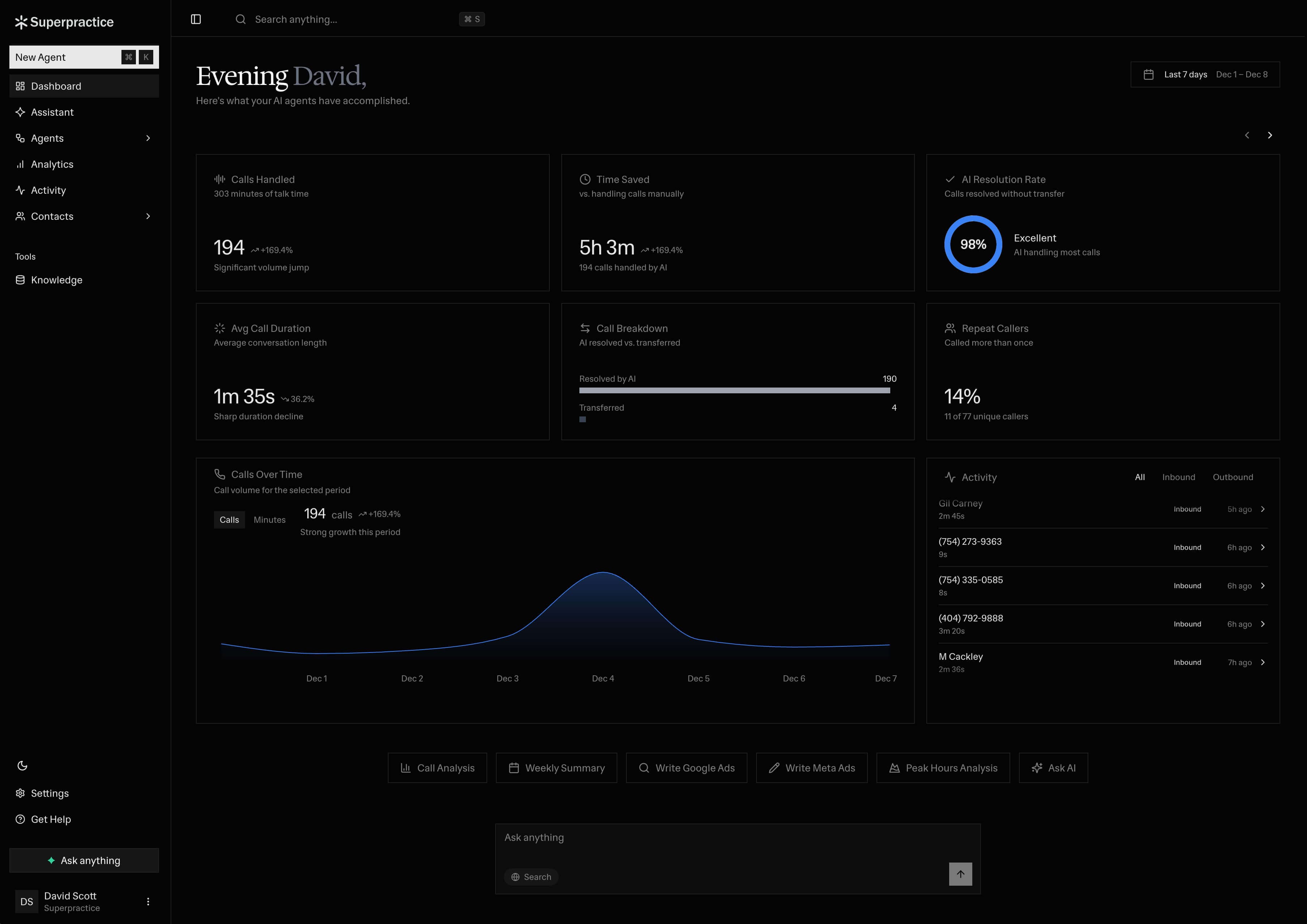
This is where conversion infrastructure becomes critical. Superpractice AI Agents handle 24/7 call answering, chat engagement, intake qualification, and automated scheduling—ensuring you never miss a qualified lead while you focus on practicing law. These aren’t replacements for human connection; they’re force multipliers that ensure every lead receives immediate attention.
Voice search optimization and mobile-first strategies continue growing in importance. As more people use voice assistants and mobile devices to search for legal services, law firms must optimize their content and websites accordingly.
The integration of multiple digital channels yields the best results for law firm growth in 2025 and beyond. The most successful firms create cohesive experiences across their website, social media platforms, email marketing, and paid advertising campaigns—systematically addressing each pillar of effective client acquisition.
Emerging trends shaping the future include:
- Interactive content, like legal calculators and assessment tools.
- AI-powered systems for initial client screening and questions.
- Personalized website experiences based on visitor behavior and interests.
- Enhanced local search features, including appointment booking and virtual consultations.
- Privacy-focused marketing is adapting to changing data regulations and consumer preferences.
Conclusion
A comprehensive client acquisition system combines multiple channels and tactics to build sustainable competitive advantages in today’s legal marketplace. From search engine optimization and content marketing to paid advertising and reputation management, each component plays a crucial role in attracting more clients and growing your legal practice.
The statistics are clear: with nearly all consumers searching for legal services online and potential ROI reaching 1000%, digital marketing is no longer optional for law firms serious about growth. Whether you’re a small law firm just starting your digital journey or an established practice looking to optimize existing marketing efforts, the strategies outlined in this guide provide a roadmap for success.
But here’s the uncomfortable truth: knowing what to do and actually executing it consistently are entirely different challenges. Most lawyers read guides like this, get excited about the possibilities, then return to the urgent demands of practicing law—and nothing changes. Six months later, they’re still wondering why their phone isn’t ringing while competitors book cases they should be handling.
Success requires commitment to ongoing optimization, measurement, and adaptation to changing consumer behaviors and technological advances. The legal professionals who embrace comprehensive client acquisition systems while maintaining focus on delivering exceptional legal services will thrive in the competitive landscape ahead.
You’ve spent the last fifteen minutes learning about digital marketing strategies. Now you’re facing the same decision every law firm owner faces: will you try to coordinate all these moving pieces yourself, or will you implement a proven system that delivers results?
The Superpractice™ Method eliminates the coordination chaos and DIY frustration. We deploy a complete four-pillar client acquisition system in just 7 days: high-intent lead capture through Google Search Ads, the Legal Epiphany Engine for organic demand generation, omnipresent remarketing to ensure qualified leads never slip away, and conversion infrastructure powered by Superpractice AI Agents handling 24/7 engagement.
The Superpractice Method has generated over 100,820 new client opportunities for law firms nationwide, resulting in well over $8 million in attributed revenue. We guarantee a significant influx of qualified potential clients in your practice area within 4 weeks or less—or your money back.
No long-term contracts. No coordination headaches. No empty promises about “brand awareness.” Just a done-for-you system that fills your consultation calendar with high-intent prospects while you focus on what you do best: practicing law.
Book a demo today and discover how we can create the predictable pipeline you need to scale your practice in just 7 days.
*For highly ambitious firms, ask about our: High-Velocity Year Roadmap: A 12-month strategic growth plan for ambitious law firms ready to break through revenue plateaus and scale systematically.
Keep Breaking the Mold,
The Superpractice Team